

 Ghost Dog: The Way of the SamuraiJim Jarmusch France, Germany, Japan, USA, 1999
A Black hitman who models after the samurai of old finds himself targeted for death by the mob.
More Info Talk to HerPedro Almodóvar Spain, 2002
Two men share an odd friendship while they care for two women who are both in deep comas.
More Info The Third GenerationRainer Werner Fassbinder West Germany, 1979
A wildly anarchic satire of guerrilla terrorism in which a band of leftist radicals inadvertently become puppets of the West German government, which uses them to justify its authoritarian policies.
More Info Tie Me Up! Tie Me Down!Pedro Almodóvar Spain, 1990
After being released from a mental hospital, a troubled young man tracks down an actress he once had sex with and forces her into captivity, determined to make her part of his life.
More Info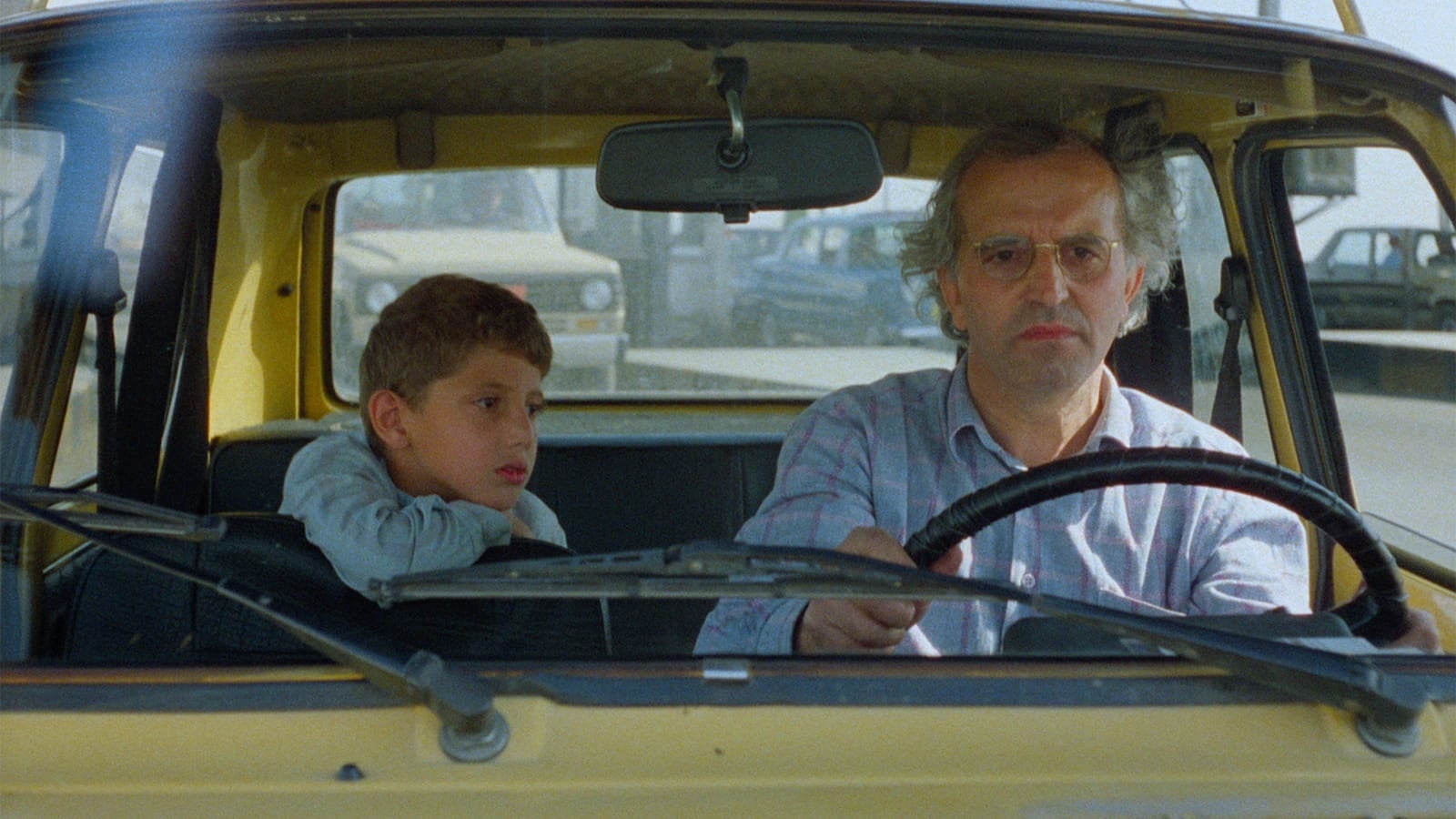 And Life Goes OnAbbas Kiarostami Islamic Republic of Iran, 1992
ZENDEGI VA DIGAR HICH is a poignant journey through rural Iran following the devastating earthquake of 1990. A director and his son travel through ruined villages to find actors from his previous film. Along the way, they encounter survivors who, despite their misfortune, continue with their lives. Internationally acclaimed, Kiarostami blends elements of documentary and narrative filmmaking into a moving meditation on resilience and the relentless flow of life. With its minimalist storytelling, slow camera movements, and natural lighting, the film combines poetic cinema with realism through improvised dialogue and amateur performances, capturing the human ability to recover and move forward from disaster.
More Info Even Dwarfs Started SmallWerner Herzog West Germany, 1970
A group of tormented patients stage a coup at an oppressive, dismal asylum after they're not allowed out on an excursion.
More Info The world is everything that is the caseEva Teppe Germany, 2002
In the midst of public festivity they rise skyward: the “castells” of the Catalan castellers – human towers built from bodies and trust. Collapse is always a possibility. In Die Welt ist alles, was der Fall ist, Eva Teppe reworks TV documentary footage and radically slows the fall. The title quotes Ludwig Wittgenstein. Documentary action turns into an abstract pull of colour and proximity. A film about falling – and about what is actually the case within the image.
More Info I've Heard the Mermaids SingingPatricia Rozema Canada, 1987
Polly is in her early thirties, but far from leading a settled life, spending her time strolling through Toronto with her camera. While developing the film in her bathroom-turned-photo lab, she drifts off into the black and white worlds. In her visions, she can fly, walk on water or hear the mermaids singing. Even though the temp agency is warning anyone interested in hiring Polly about her lack of focus, the curator Gabrielle takes her in as a secretary. While working for her, Polly starts thinking about what it means to create something, who is allowed to call themselves an artist and whether she might be in love with her boss.
With her prize-winning debut, she has continued to approach dark or profound topics in a sometimes naive or whimsical way. Being raised in a homophobic calvinist community, telling queer stories has always played an important role for her. Never afraid to try something new, putting her work of almost four decades in one box seems impossible.
More Info Permanent VacationJim Jarmusch USA, 1980
While life pulsates in crowded and hectic Manhattan, oppressive emptiness and silence reign in New York's Lower East Side, just a few blocks away. Permanent Vacation follows the life of the protagonist Aloysious Parker, a young man without a home, education, or job, over the course of two and a half days. He roams restlessly through the streets, always a little ahead of what seems to be pursuing him. Allie, who is 16 years old at the time, has already met and lived with a wide variety of people who, like him, fall outside of normative society, and whose stories we hear.
Drawing on the extremely vibrant New York post-punk scene of the late 1970s, Jim Jarmusch's lyrical film debut traces the fleeting coming-of-age attitude of a young generation embodied by the sensitive yet self-absorbed protagonist Chris Parker, who is in a state of constant, directionless motion. A film imbued with quiet melancholy and staged in a dreamlike manner.
More Info Hunting Scenes from BavariaPeter Fleischmann Germany, 1969
“I'd love to blow up the whole cinema with this filth!” Sinister threats like this were commonplace in the letters to the editor section of the Landshuter Zeitung newspaper in the spring of 1969. The reason for this was Peter Fleischmann's feature film debut.
When 20-year-old homosexual Abram returns to his home village, the farmers tease him, his own mother calls him a “dirty pig,” and a pogrom-like atmosphere develops. For a long time, he tried to ignore the malicious mockery of his fellow villagers. Hannelore, who is reviled as the “village whore,” is the only person who shows him understanding and affection. Meanwhile, the villagers' prejudices escalate into outright hatred. When word gets around that Hannelore is pregnant by Abram, the situation escalates.
The story of a village that gets carried away in a witch hunt against a young gay mechanic. It was one of the first plays to seriously address the issue of homosexuality and the resulting upheaval in a bigoted village community.More Info In BrugesMartin McDonagh United Kingdom, USA, 2008
“So, what do you do, Raymond?” – “I... shoot people for money.”
After his first job as a professional hitman goes wrong, Ray is sent to Bruges for a forced vacation. However, his trainer and long-time veteran in the murder business, Ken, quickly takes a liking to all the culture, tranquility, and opportunity for introspection that Bruges promises him. Awaiting further instructions from their boss, the two remain in their shared hotel room and quickly get on each other's nerves...
In his first feature film, Martin McDonagh quickly reveals his humorously macabre style, which would become more pronounced in his subsequent works. In addition to unusual dialogues that perfectly intertwine humor with absurd philosophical thoughts, he also knows how to establish extraordinarily complex characters. These characters fight not only external but also internal battles, giving the film a depth that goes far beyond mere entertainment value.More Info Bad LieutenantAbel Ferrara USA, 1992
A drug-addicted New York police officer, enslaved by his passion for gambling, encounters a raped nun and discovers a new dimension of spirituality. Ultimately, he finds salvation in a vision of Christ descending from the cross. This is a relentlessly harsh character study of a person in existential chaos who tries in an unusual way to endure the extreme tension between looking into the abyss of ugliness and meanness and the purity of the spiritual. The director subjects the viewer to an experience that is not easily shaken off: despite its harshness, the film is an unusual treatment in cinema of the question of humanity's need for salvation.
More Info The Silence of the LambsJonathan Demme USA, 1991
Clarice Starling is a top student at the FBI's training academy. Jack Crawford wants Clarice to interview Dr. Hannibal Lecter, a brilliant psychiatrist who is also a violent psychopath, serving life behind bars for various acts of murder and cannibalism. Crawford believes that Lecter may have insight into a case and that Starling, as an attractive young woman, may be just the bait to draw him out.
More Info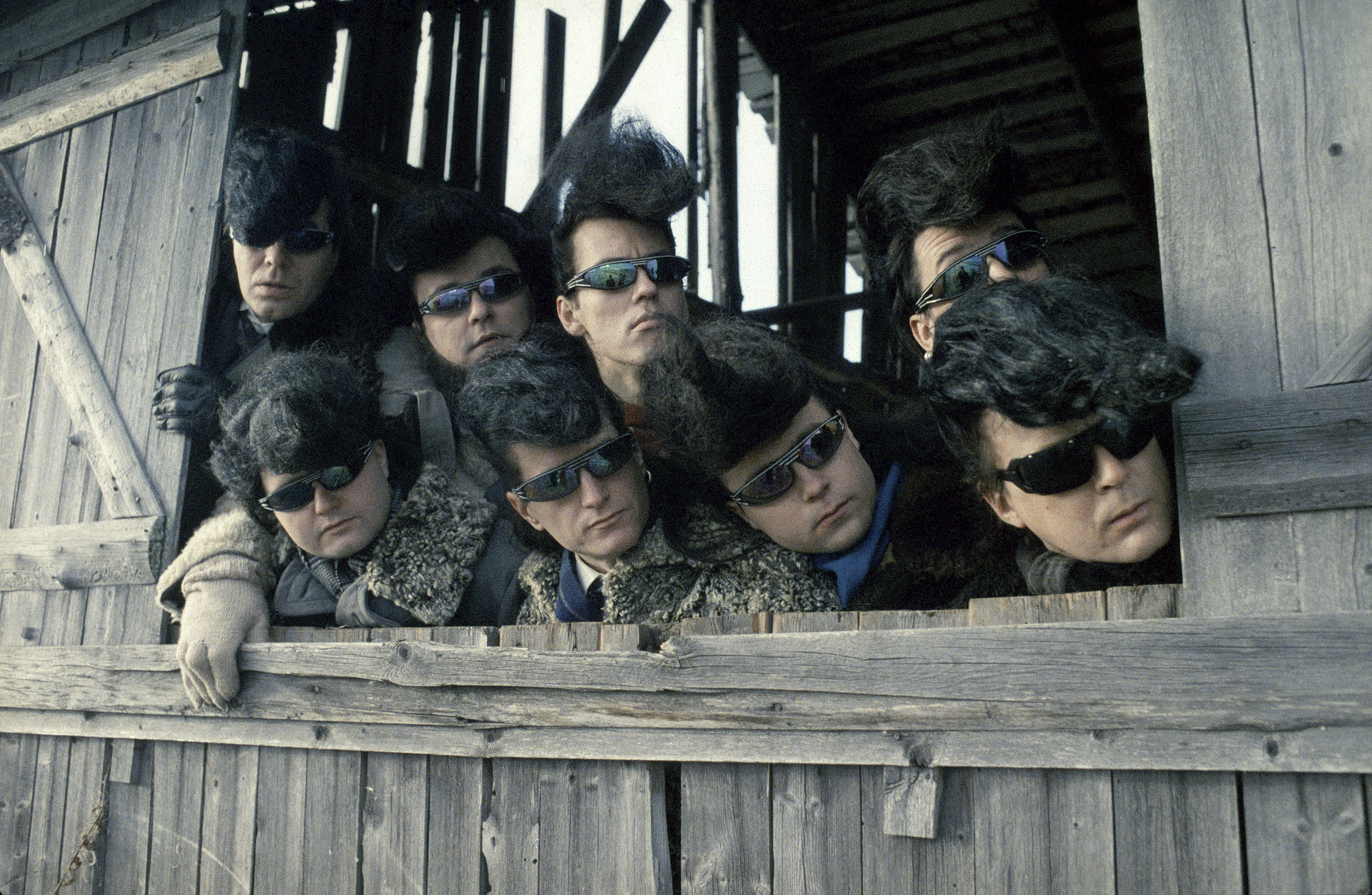 Leningrad Cowboys Go AmericaAki Kaurismäki Finland, Sweden, 1989
Somewhere in the tundra, in no man's land, there is the worst rock 'n' roll band in the world, perfectly styled, but without an audience and without the slightest chance of commercial success: the Leningrad Cowboys. They decide to bury their national pride and head for the United States, where people will "eat any crap". This movie tells the story of their journey across the ocean and across the continent, a story of disreputable pubs and decent people in the backyard of the Hamburg nation.
More Info Death Race 2000Paul Bartel USA, 1975
In a boorish future, the government sponsors a popular, but bloody, cross-country race in which points are scored by mowing down pedestrians. Five teams, each comprised of a male and female, compete using cars equipped with deadly weapons. Frankenstein, the mysterious returning champion, has become America's hero, but this time he has a passenger from the underground resistance.
More Info Stranger Than ParadiseJim Jarmusch USA, 1983
At first glance, not much happens in Stranger Than Paradise. Willie Molnar (John Lurie) is a New York hipster with Hungarian roots, whom we accompany through his everyday life over the course of three episodes. First, Willie gets a visit from his Hungarian cousin Eva, who stays with him for ten days until her aunt Lotte is discharged from the hospital. Initially annoyed by the uninvited guest, Willie gradually opens up—and in the following two episodes, he even leaves his beloved New York to see Eva. And Lake Erie, even though there isn't really that much to see there... “Stranger Than Paradise” is Jim Jarmusch's second feature film and marks a breakthrough not only in the director's career, but also in the international visibility of micro-budget US independent cinema in general. It is also full of enchantingly laconic moments in which either nothing happens – or everything happens.
More Info Dead ManJim Jarmusch USA, Japan, Germany, 1995
William Blake (Johnny Depp) may bear the name of the famous American poet, but he is also a doppelganger of K., the (almost) nameless protagonist of Kafka's “The Castle.” Like him, he arrives in a foreign land to take up a position—not as a surveyor, but as an accountant in the run-down town of “Machine”—the last stop at the end of the railway line and the surveyed world. But the job has already been filled, and after a rendezvous with a prostitute and a bloody confrontation with her jealous lover, Blake finds himself seriously wounded and on the run. Together with the well-read Native American Nobody, Blake embarks on a psychedelic journey that takes him not only to the edge of the afterlife, but also deep into the American myth.
More Info Come and SeeElem Klimov , 1985
The invasion of a village in Byelorussia by German forces sends young Florya into the forest to join the weary Resistance fighters, against his family's wishes. There he meets a girl, Glasha, who accompanies him back to his village. On returning home, Florya finds his family and fellow peasants massacred. His continued survival amidst the brutal debris of war becomes increasingly nightmarish, a battle between despair and hope.
More Info ContemptJean-Luc Godard France, Italy, 1963
A philistine in the art film business, Jeremy Prokosch is a producer unhappy with the work of his director. Prokosch has hired Fritz Lang to direct an adaptation of "The Odyssey," but when it seems that the legendary filmmaker is making a picture destined to bomb at the box office, he brings in a screenwriter to energize the script. The professional intersects with the personal when a rift develops between the writer and his wife.
More Info Young Soul RebelsIsaac Julien United Kingdom, 1991
Two disc jockeys have a friend's murder to solve in the fringe-group melting pot of 1977 London.
More Info