

 Dissapointment ArrangementJason King Germany, 2016
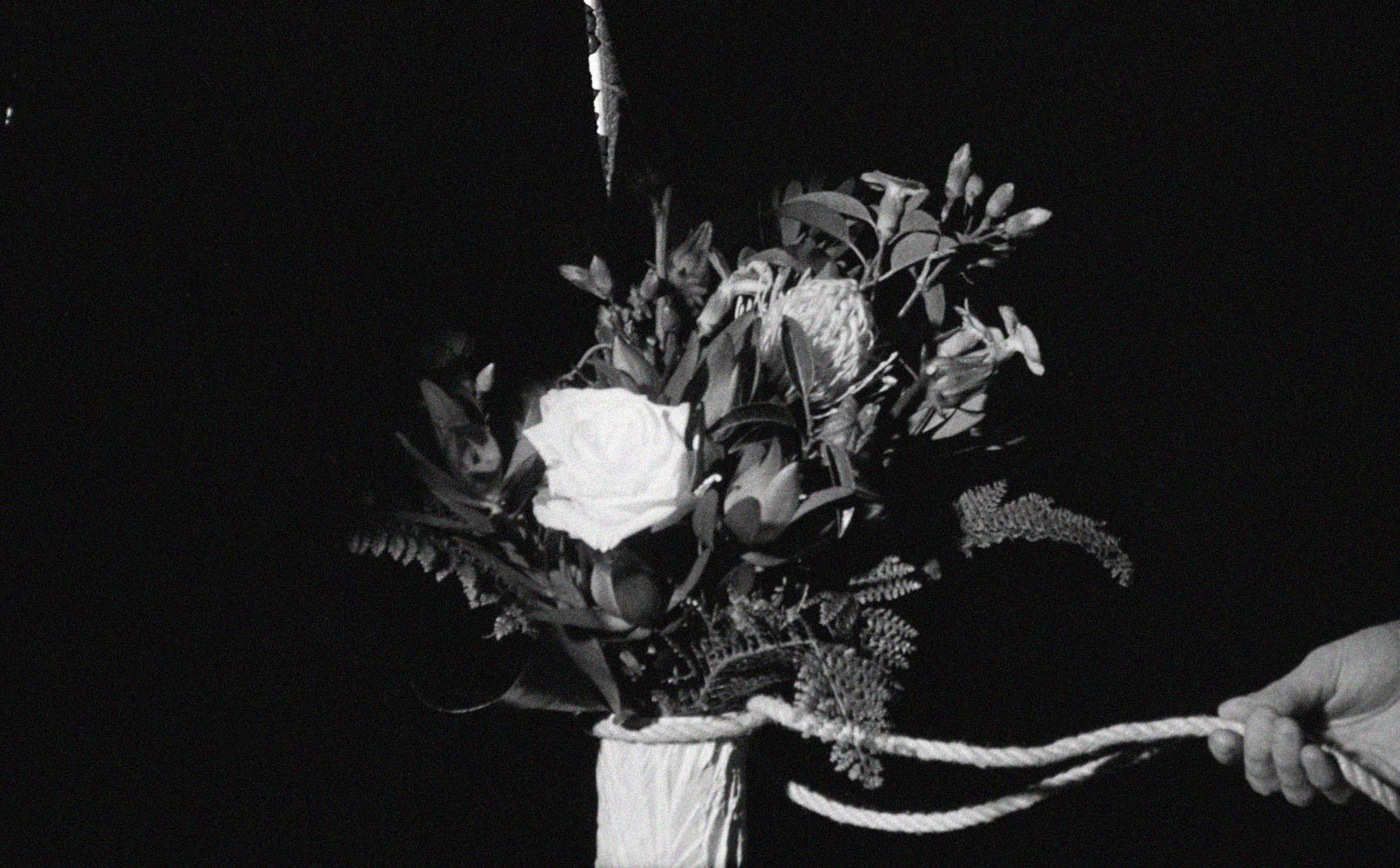
In his “observation” Disappointment Arrangement, Jason King examines a bouquet of flowers. Created in the Observations seminar, shot without sound on 16mm film, a still life is viewed scenically. Roses are red, violets are blue...
The so-called “Observations” have been created at the HfG since 2009. Professor Thomas Heise introduced this exercise, in which two formal guidelines shaped the films: Everyone was assigned a roll of 16mm film (approx. 11 minutes) and had to observe something. No sound was recorded and the films were developed by hand in a chemical bucket (wearing protective gloves).More Info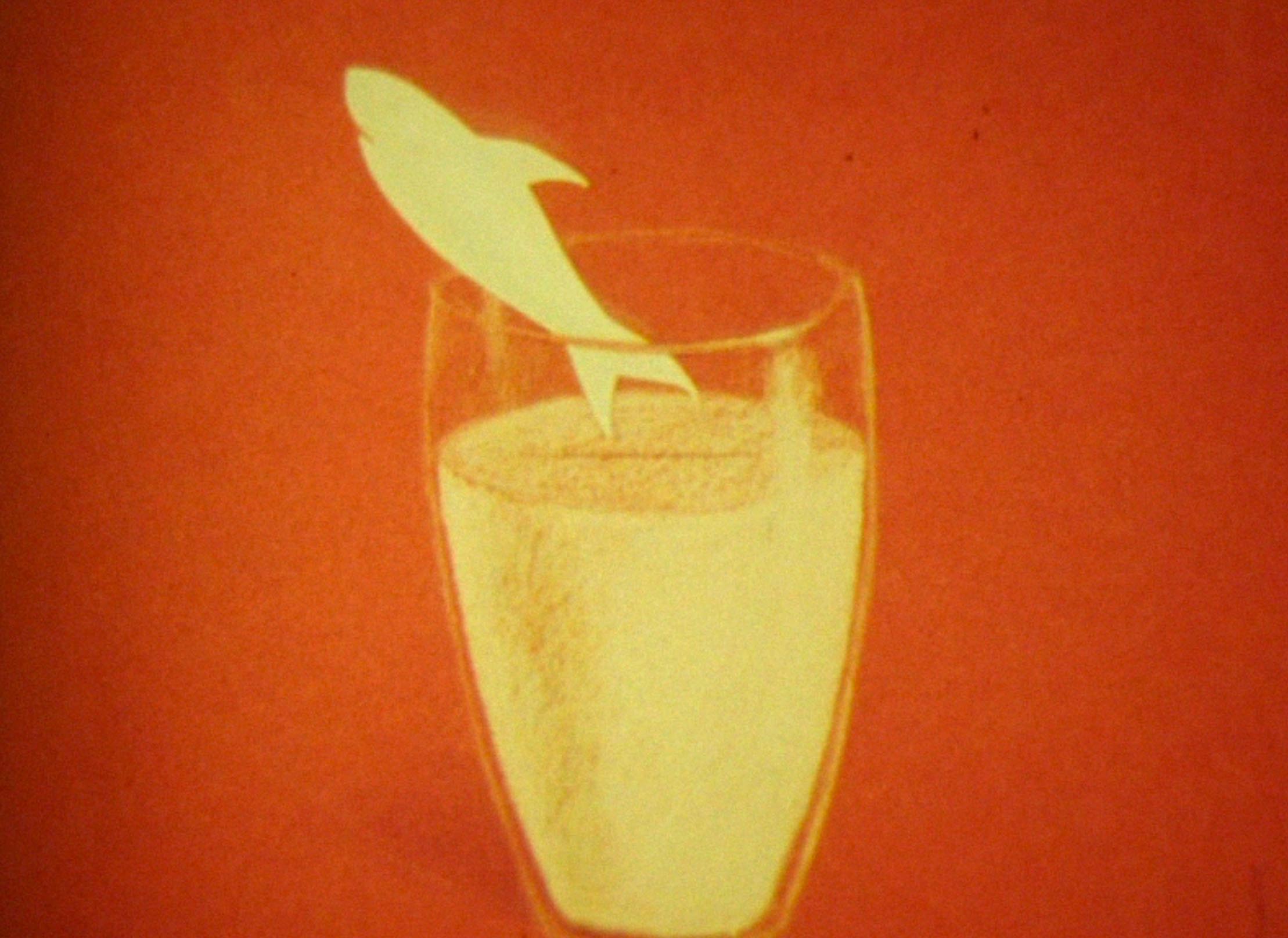 14 masterpieces of film historyJulia und Patricia Germany, 1996
This early work in the history of HfG film, in which even the filmmakers' first names have been retained, shows us a very personal approach to 14 classics of film history.
The HfG DVD edition Animata (2015), which is dedicated to the publication of HfG animated films, has rediscovered this small but fine animated film from the 1990s, among others. Produced analogously with 16mm material on an animation table, the students “Julia and Patricia” give us their very own view of film history. If anyone can remember the filmmakers' full names, we would be happy to pay them this final tribute.More Info Szene MarleneDavid Loscher Germany, 2014
A playful portrait of a young woman.
This portrait by HfG alumnus David Loscher retains only one aspect of Thomas Heise's dogmatic design: the 16mm material—filmed and then developed in a bucket. Otherwise, Loscher sticks to his own rules. Echoes of the protagonists of Godard and Truffaut and a rejection of the documentary format. This is a portrait, not a documentary.More Info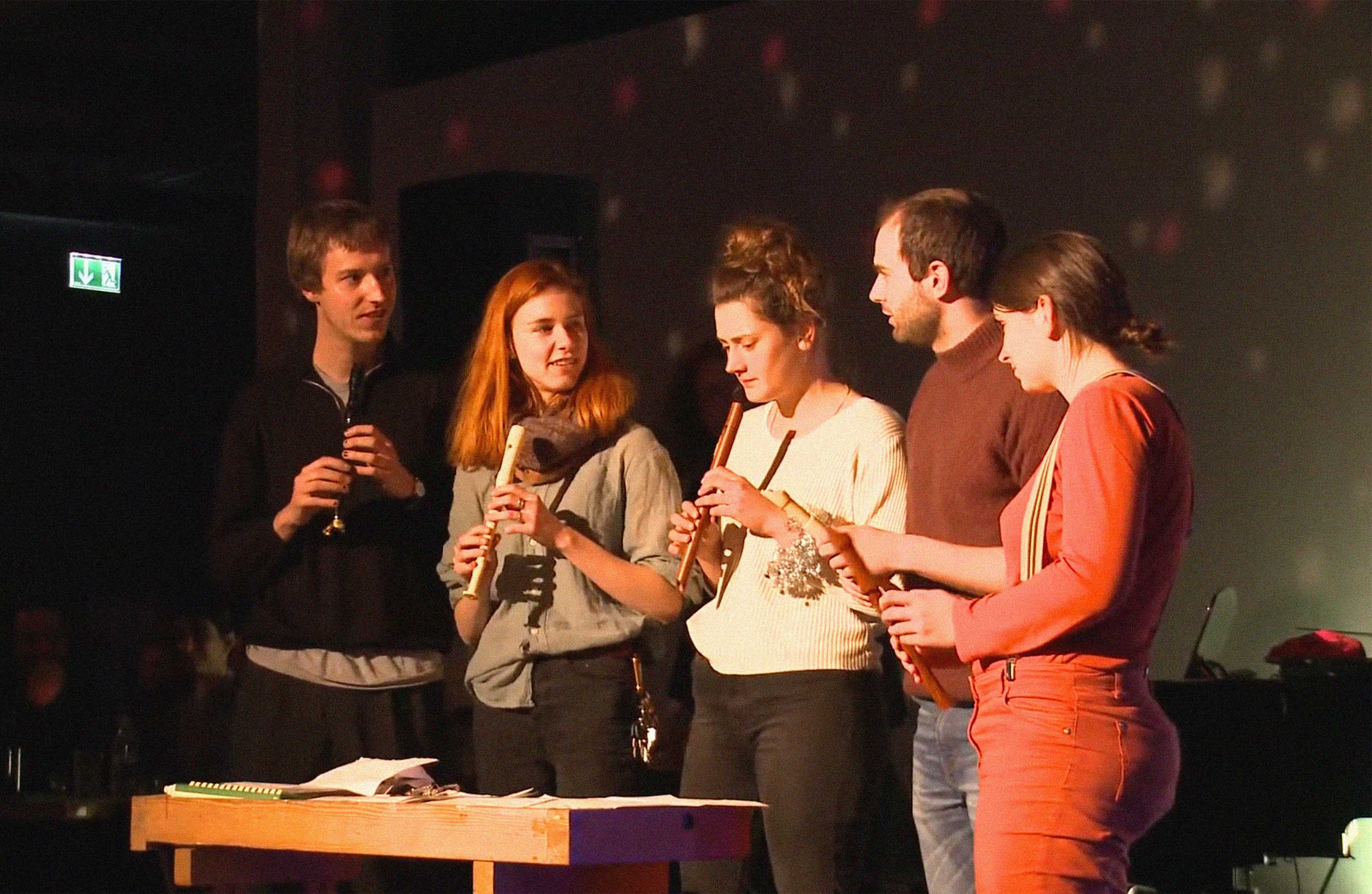 Die Fünf Flötis & ihre Flotten FlötenAlexander Thelen Germany, 2017
HfG Christmas party 2017: The Fünf Flötis and their Flotten Flöten give one of their most beautiful concerts on an unforgettable evening in December. Merry Christmas!
Philip Lawall, Anja Ruschival, Valentin Pfister, Leonie Ohlow and Lena Loy flute for all they're worth. Included in their repertoire: “Tochter Zion”, “Was soll das bedeuten” and above all their hit “Last Christmas”. Incidentally, the Flötis started their career at the HfG Christmas party last year and have been making Karlsruhe's Christmas markets unsafe ever since. In 2017, the HfG Karlsruhe imposed extra budget restrictions in order to hire the Flötis, who had become very expensive in the meantime, once again for the Christmas party.More Info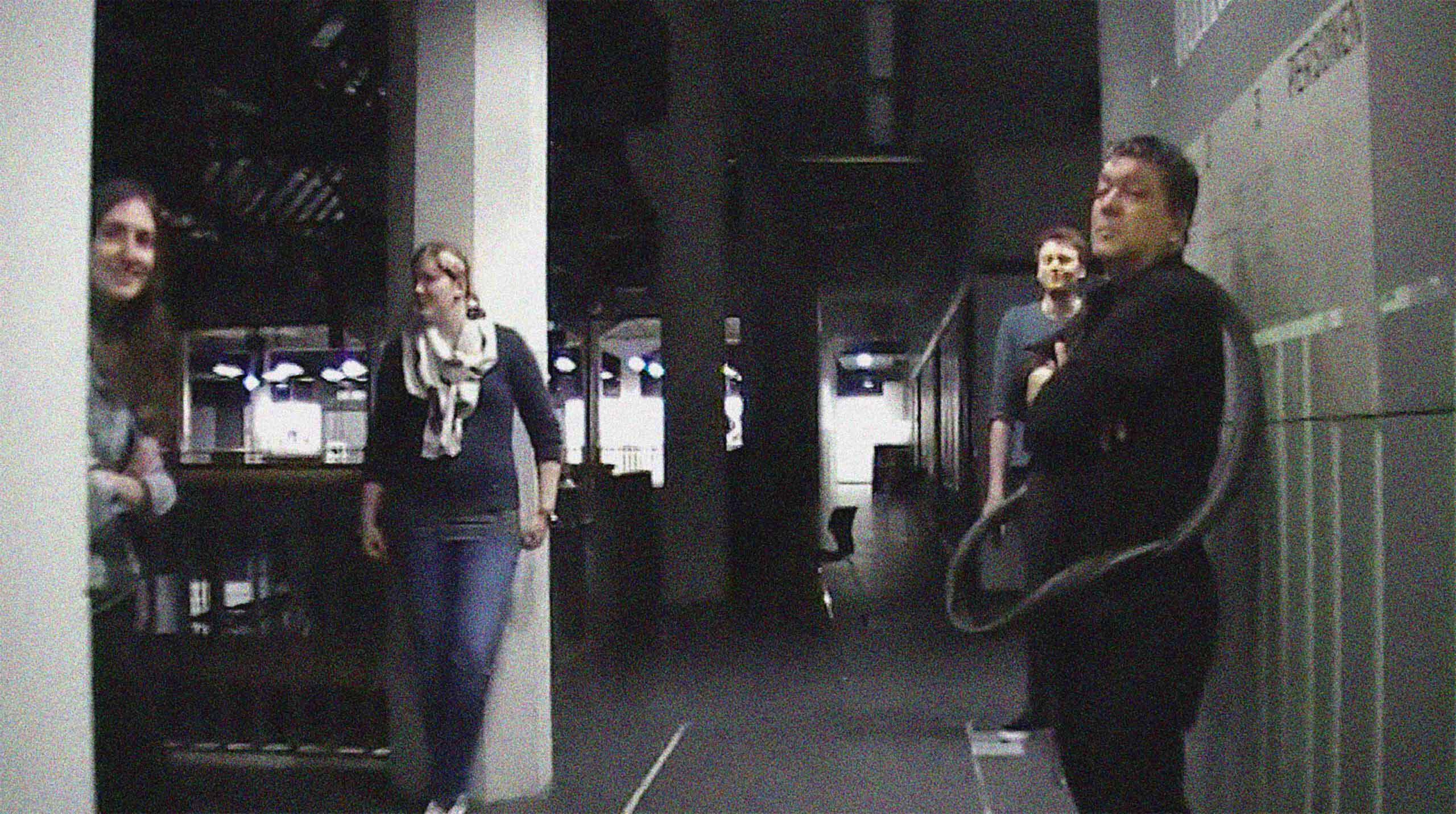 Die HfG Wochenschau 18/4Philip Lawall, Jason Stewart Germany, 2018
We remember the HfG Wochenschau! These informative short reports were produced weekly by the cinema team in the winter semester 2017/18 and shown before the screenings in the Blauer Salon. We are exclusively showing the first newsreel from calendar week 4, 2018. One week of HfG - one week of total madness!
In the fall of 2017, the HfG cinema team discovered hundreds of historical German newsreels in the basement of a cinema. When viewing this format, which informed viewers worldwide and up until the 1980s about current weekly events before cinema films, it became clear that the HfG immediately needed its own newsreel. Everything that happened in the building was documented every week and presented daily before the films in the Blue Salon.More Info Die HfG Wochenschau 18/5Philip Lawall, Jason Stewart Germany, 2018
Now it's time for the second part of the HfG Wochenschau! In the fifth calendar week of 2018, employees are introduced, jokes are told, tracks are read and things, er... storyboards! are edited. Very informative, as always.
In the fall of 2017, the HfG cinema team discovered hundreds of historical German newsreels in the basement of a movie theater. When viewing this format, which informed viewers worldwide and up to the 1980s about current weekly events before movies, it became clear that the HfG immediately needed its own newsreel. Everything that happened in the building was documented every week and presented daily before the films in the Blue Salon.More Info Die HfG-Wochenschau 18/6Philip Lawall, Jason Stewart Germany, 2018
In the third and final episode of the cult weekly show, the really big questions are answered: What does KD actually stand for? How do you use a hammer? And: Which parties are better, those at the Kunstakademie or the HfG? Tune in and find out!
The new - now divorced - Chancellor Christiane Linsel will also be introduced!
In the fall of 2017, the HfG cinema team discovered hundreds of historical German newsreels in the basement of a movie theater. When viewing this format, which informed viewers worldwide and up until the 1980s about current weekly events before movies, it became clear that the HfG immediately needed its own newsreel. Everything that happened in the building was documented every week and presented daily before the films in the Blue Salon.More Info Der Schatz des PriamosChristian Haardt Germany, 2014
Christian Haardt weaves a new story from ancient HfG archive material that flickers by like a dream - pure imagination!
Did you know: Christian Haardt's Vordiplom was not actually intended as a film - but as an installation! The film material was running on the editing table: an experimental film edited together from copies of students' works found in the film archive, which weaves together a wide variety of stories to create a universal story. This is the first time we have been able to show the film. Thank you for that!More Info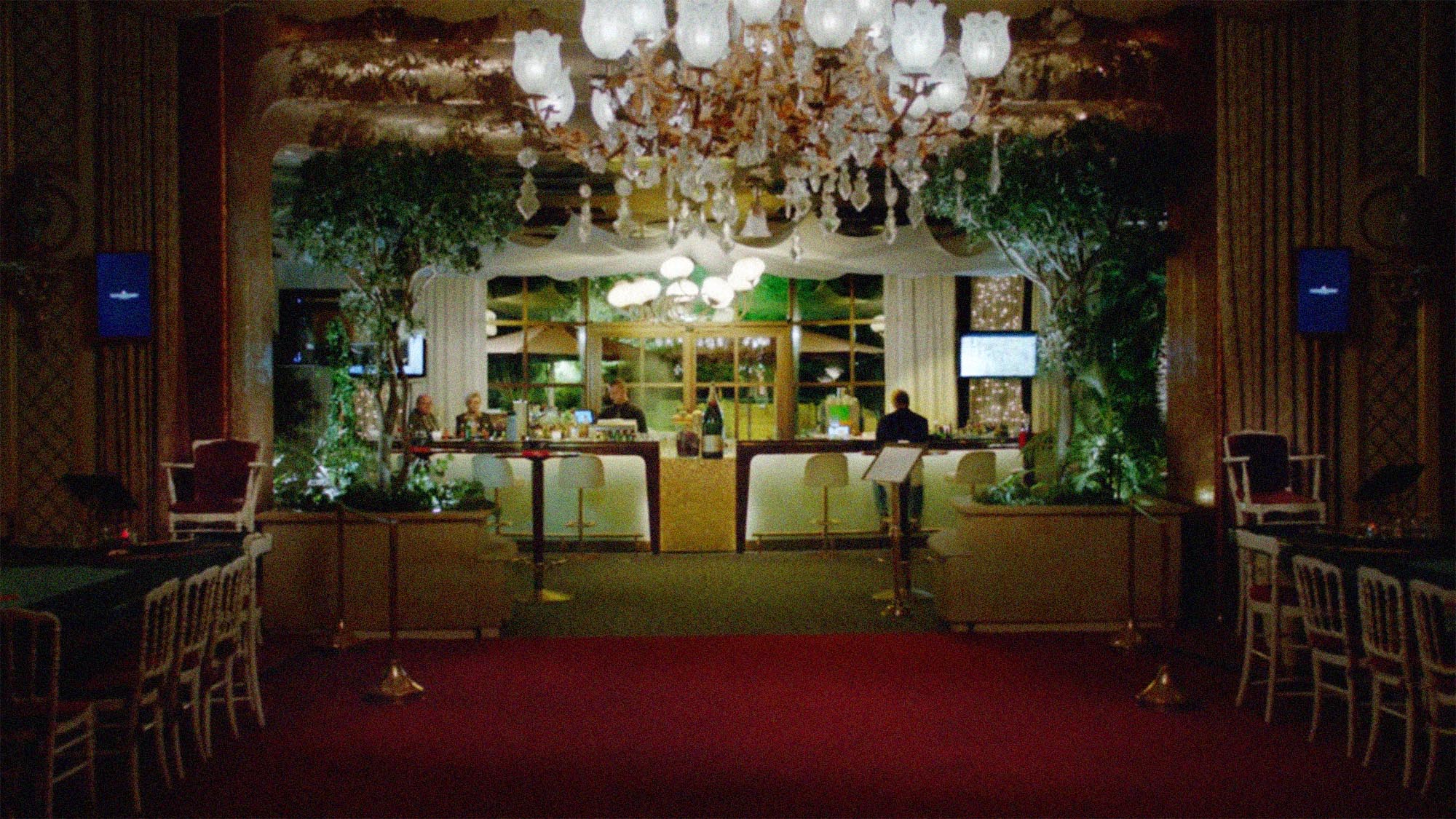 SpielBastian Epple Germany, 2013
Hands exchange banknotes for plastic. Spiel is a 3D documentary about the business of gambling. In atmospheric images, it observes the operation of the Baden-Baden casino.
Something very interesting happens in Bastian Epple's film: the documentary images that accompany the operation of a casino increasingly slip into an atmospheric story of people, machines and movements. The film oscillates between reality and fiction, the movements of this pendulum become ever larger and ultimately blurred.More Info Was wäre wenn die BlumeSarah Thöle Germany, 2008
Was wäre wenn die Blume jene Erde unter sich verabscheuen würde? Ein Gedicht wird zur Frage und fordert zum Gespräch auf – Eine erstaunlich tiefgründig endende Aktion…
Sarah Thöles Film feierte beim 4. Internationalen Zebra Poetry Film Festival 2008 in Berlin Premiere. Das kurze Gedicht des Iraner Künstlers Shooresh Fezonis wird erst zur Frage und dann zur Einladung Nachzudenken über Menschliches, Allzumenschliches. Im Naturgarten Thöle hören wir das Philosophieren der Kundinnen und Kunden während die Bilder die Blume und ihre Erde zeigen.More Info HfG Party 1996Homevideo Germany, 1996
Legend has it that the most blatant HfG party of all time was accidentally captured for posterity in a 40-minute home video made by an unknown amateur filmmaker in 1996. However, the VHS was forgotten in a VHS player and when it went into the attic, all hope of ever finding it again was lost and gradually the video was forgotten. Almost 30 years later, media art student Pavel Pudnik stumbled across a box of discarded technology and found a VHS player inside. When he plugged it in, he couldn't believe his eyes, what he saw was the lost video, what he saw there was probably the most awesome party ever!
More Info The ContestGerhard Schwarz Germany, 1989
At the 1989 Skateboard World Championships in Münster, over 250 skaters - including legends such as Tony Hawk and Lance Mountain - compete for the title of “Champion of the World”. They celebrate the newly built pool with breathtaking tricks and daring jumps. A gripping contemporary document of the scene, which was shown at the Berlinale in 1991.
More Info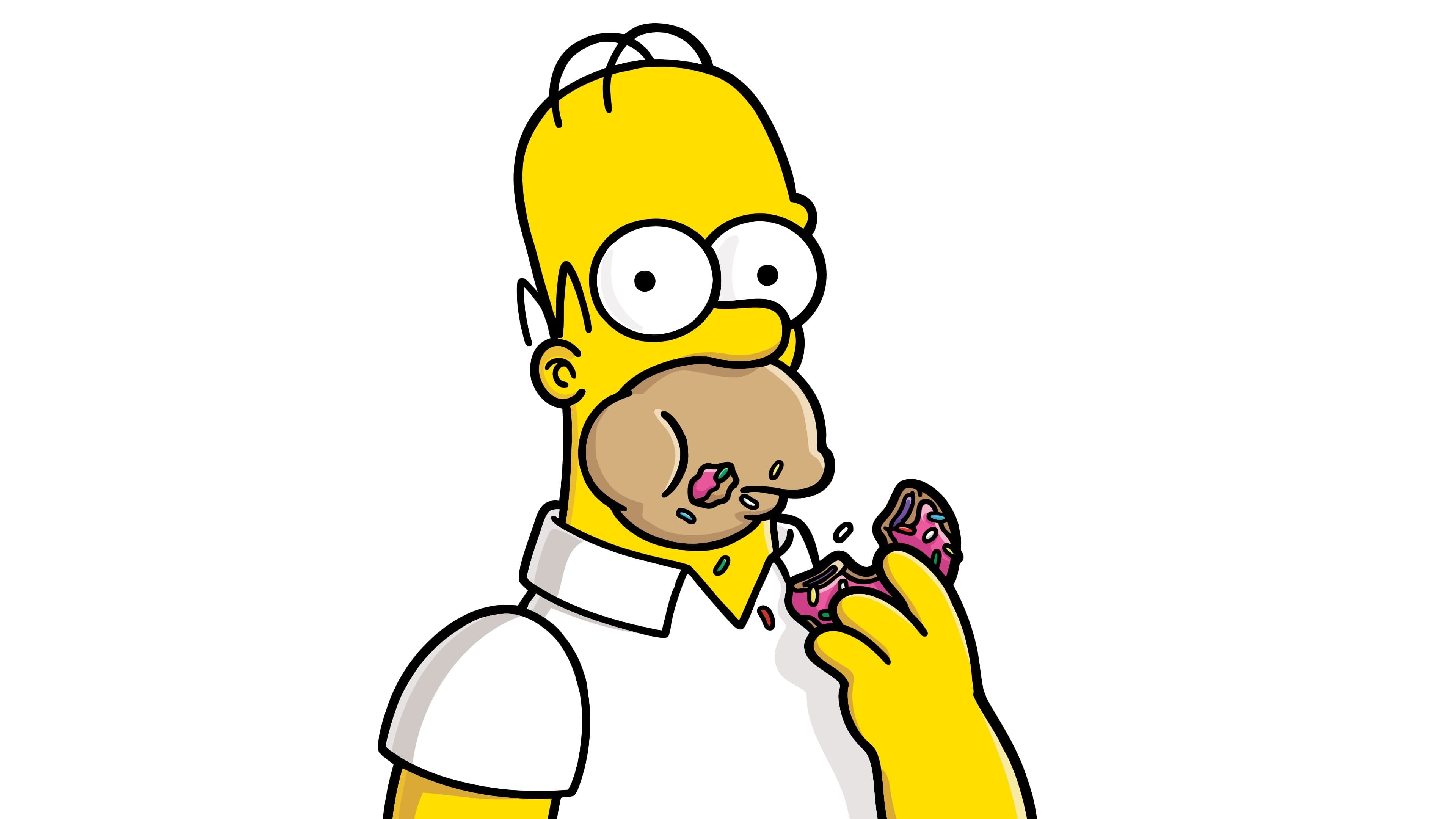 The Simpsons MovieDavid Silverman USA, 2007
I can't miss the screening of The Simpsons Movie at Kino im Blauen Salon /
I can't miss the screening of The Simpsons Movie at Kino im Blauen Salon /
I must not miss the....
Just right! Simpsons - the movie on 35mm. A very special event, even for us. During the nerve-wracking program session for this summer semester, between all the seriousness and poetry, we came across the above-mentioned monument of cartoon film history while looking through our own copy archive and agreed pretty quickly that this copy definitely deserved to see the projector light again. Outside of any series or frame.
Things are not going well for environmental protection in Springfield when Homer literally breaks the camel's back in the lake outside the city gates. When US President Schwarzenegger then takes drastic measures and has a huge glass dome placed over the contaminated town, Homer is exposed to the fury of his fellow citizens. Springfield's inhabitants form a mob and have only one goal: to lynch Homer.More Info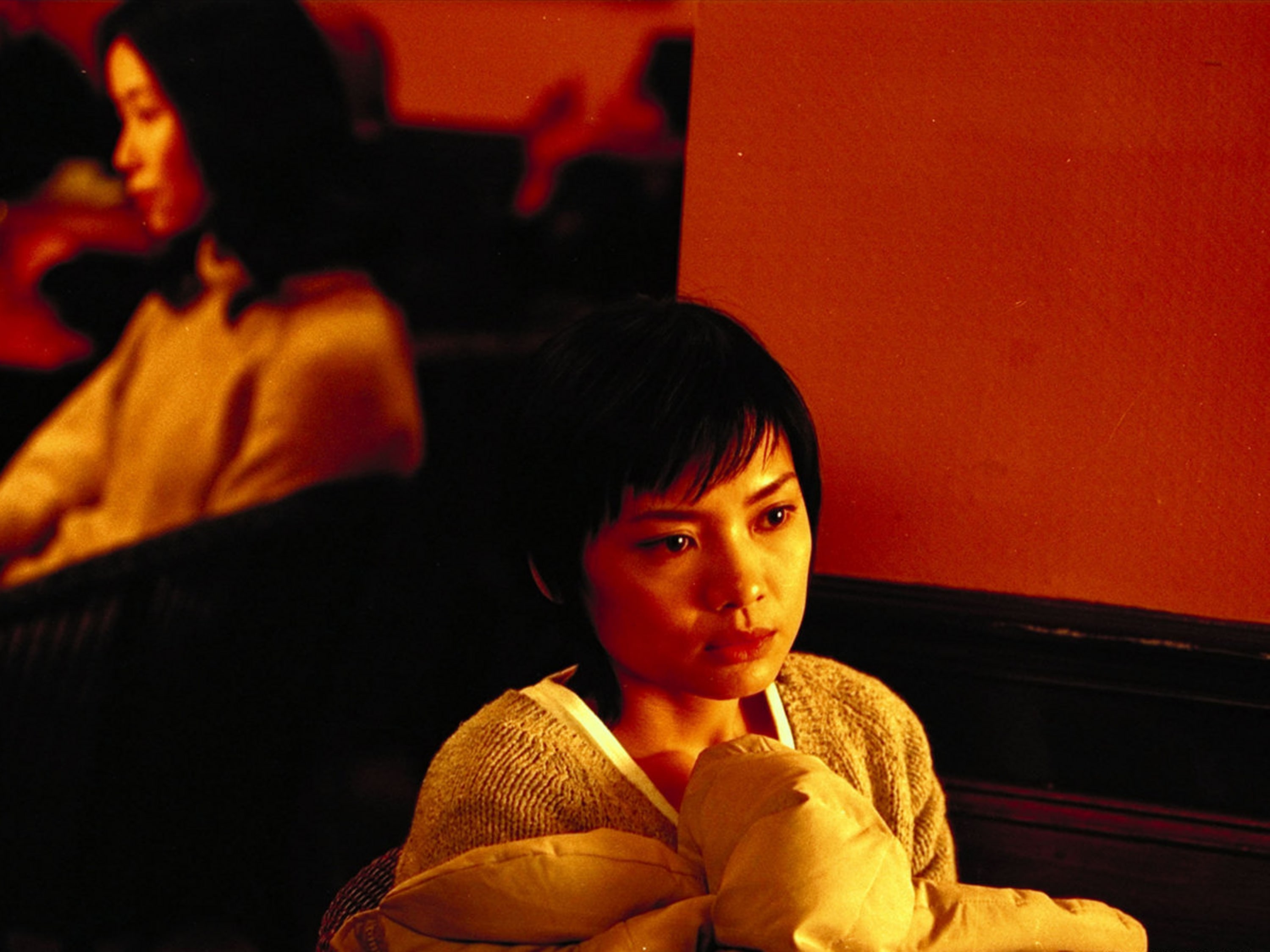 What Time Is It There?Tsai Ming-liang France, Taiwan, Province of China, 2001
What Time Is It There? begins with a mysterious encounter: the Chinese woman Shiang-chyi is planning to go to Paris and seeks a watch with two different dials that will show her the time from home. The young street vendor Hsiao-Kang (Lee Kang-sheng) happens to own such a watch. Although he initially refuses to sell it, his thoughts of Shiang-chyi become so intense that he starts setting all the clocks in Taipei to Parisian time in an attempt to feel closer to her. In Paris, Shiang-chyi experiences strange events as well, in this quiet film-poem about time, presence, and absence. Through the juxtaposition of "Taipei" and "Paris," a subtle humor emerges in cinematic interactions across geographical distances. The two main characters are also connected through their own references to Truffaut’s Les Quatre Cents Coups (1959). A film that, in its peculiar quiet way, hints at a harmonious connection that spans the globe (Walter Ruggle).
More Info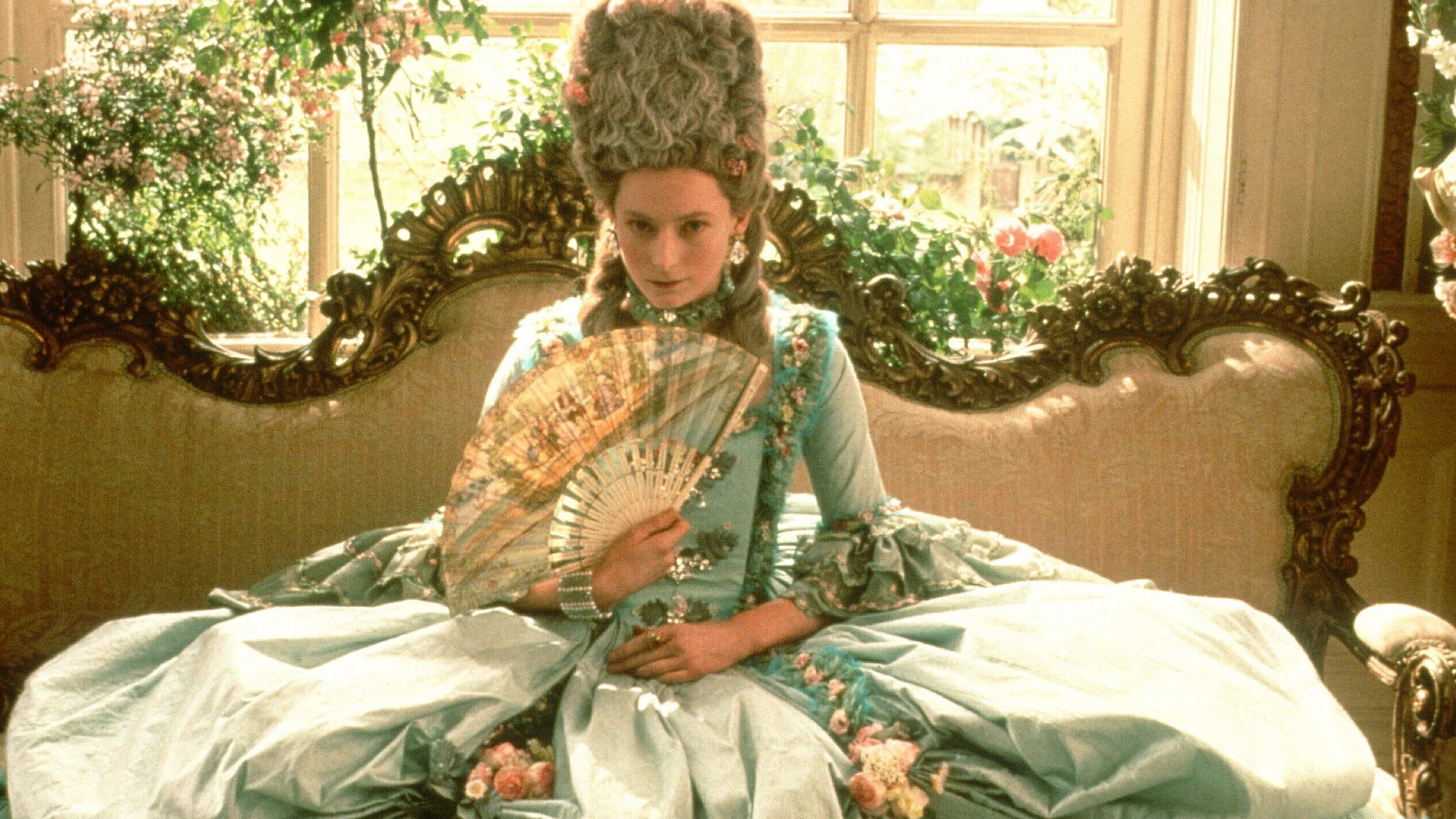 OrlandoSally Potter France, Italy, Netherlands, Russian Federation, United Kingdom, 1992
“Orlando, the hero, will live from the days of Elizabeth in the 16th century to the present and become a woman halfway through.” This is how Virginia Woolf summarized the content of her masterpiece. When the British author published “Orlando” in 1928, she was passionately in love with Vita Sackville West. Woolf dedicated “Orlando” to the garden designer and writer from an old aristocratic family and wrote: “I have lived in you all these months - when I come out, what are you really like? Did I make you up? “In 1992, Sally Potter adapted the book into a lavish costume drama with a star-studded cast. Tilda Swinton shines in it as the androgynous Orlando, Quentin Crisp, the British icon of early gay emancipation, plays Elizabeth I in a parade role, and Jimmy Somerville (“Don't Leave Me This Way”) makes a literally angelic appearance with his falsetto voice. Hardly any other film has brought the gender discourse to the screen with so much light-footed irony and so much poetic charm.
More Info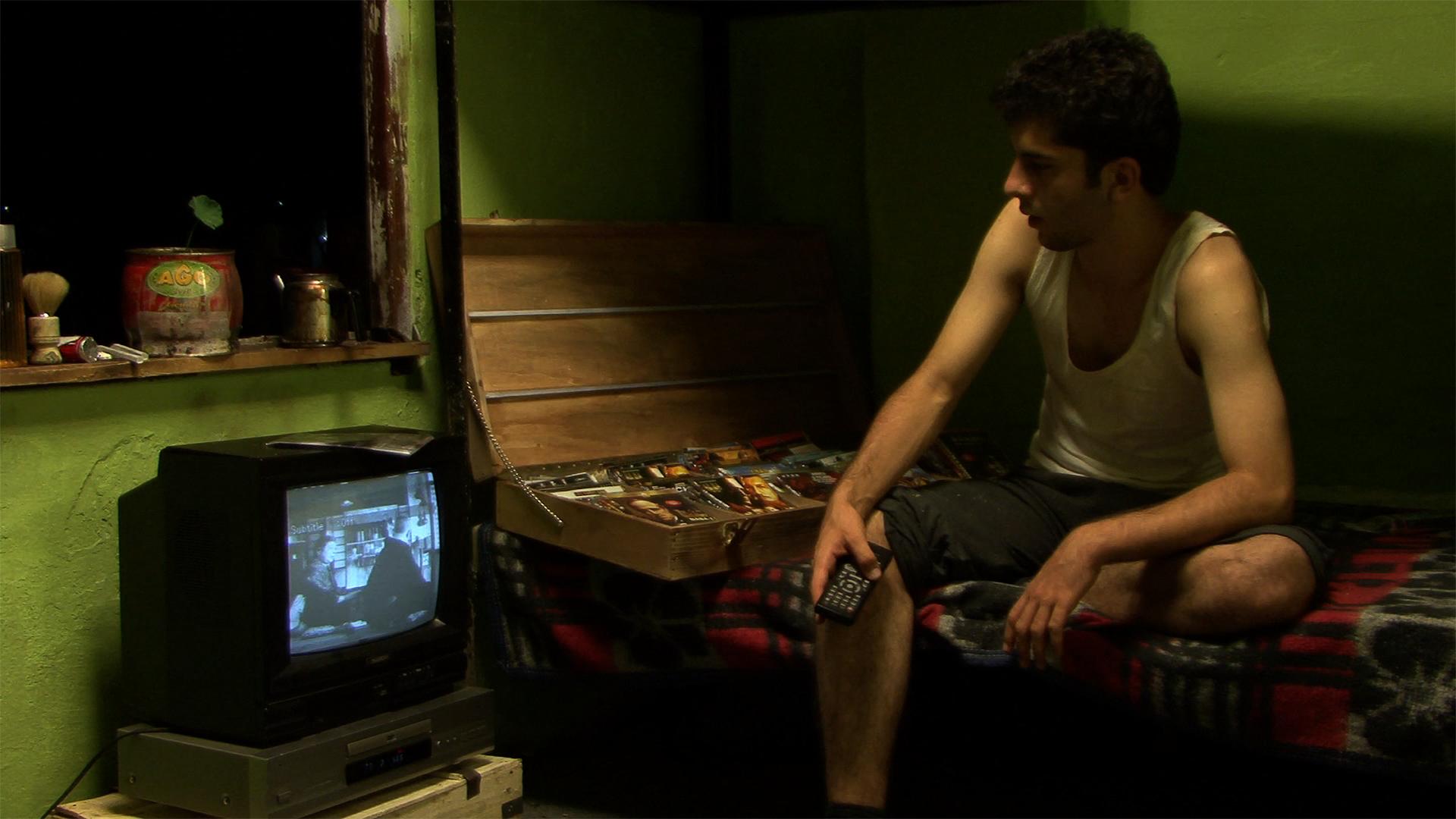 GeraniumMustafa Emin Büyükcoşkun Türkiye, 2008
Selling pirate film CD’s on his chart, the young man has a humble and unpretentious life, sharing a room with his construction worker mates. Till the day, when an unknown passenger from the ferry asked him about a Japanese film he had never heard of. Looking after the film but waiting for the passenger, he slowly finds himself in a passionate affection, which grows parallel to the geranium he germinated from a leaf. One day he sees the passenger in a cafe, but cannot approach to talk to her. His waiting transforms into another dimension, where the passenger doesn’t hold any more importance. The film not only depicts this passionate story of the young CD vendor, but also a ballad to a disappearing film media and its makers, a media archeology of contemporary film culture in Istanbul.
More Info Man Bites DogRémy Belvaux, André Bonzel, Benoît Poelvoorde Belgium, 1992
In this pitch-dark mockumentary, a camera crew accompanies the charismatic serial killer Ben, who kills people with the nonchalance of a boy next door and the eloquence of a literature professor. Along the way, he offers tips on the weight of corpses, interior design, and how to deliver mail more efficiently—literally. With biting humor and merciless satire, the film leaves an impression that is not easily shaken off.
Directed by Rémy Belvaux, Man Bites Dog becomes cynical fun, bitter social criticism, and an absurd study of the fascination with evil. It shows how easily we consume violence as long as it is well staged. When it was released, the film shocked audiences—today it is considered a cult classic that asks questions that one might prefer not to answer.More Info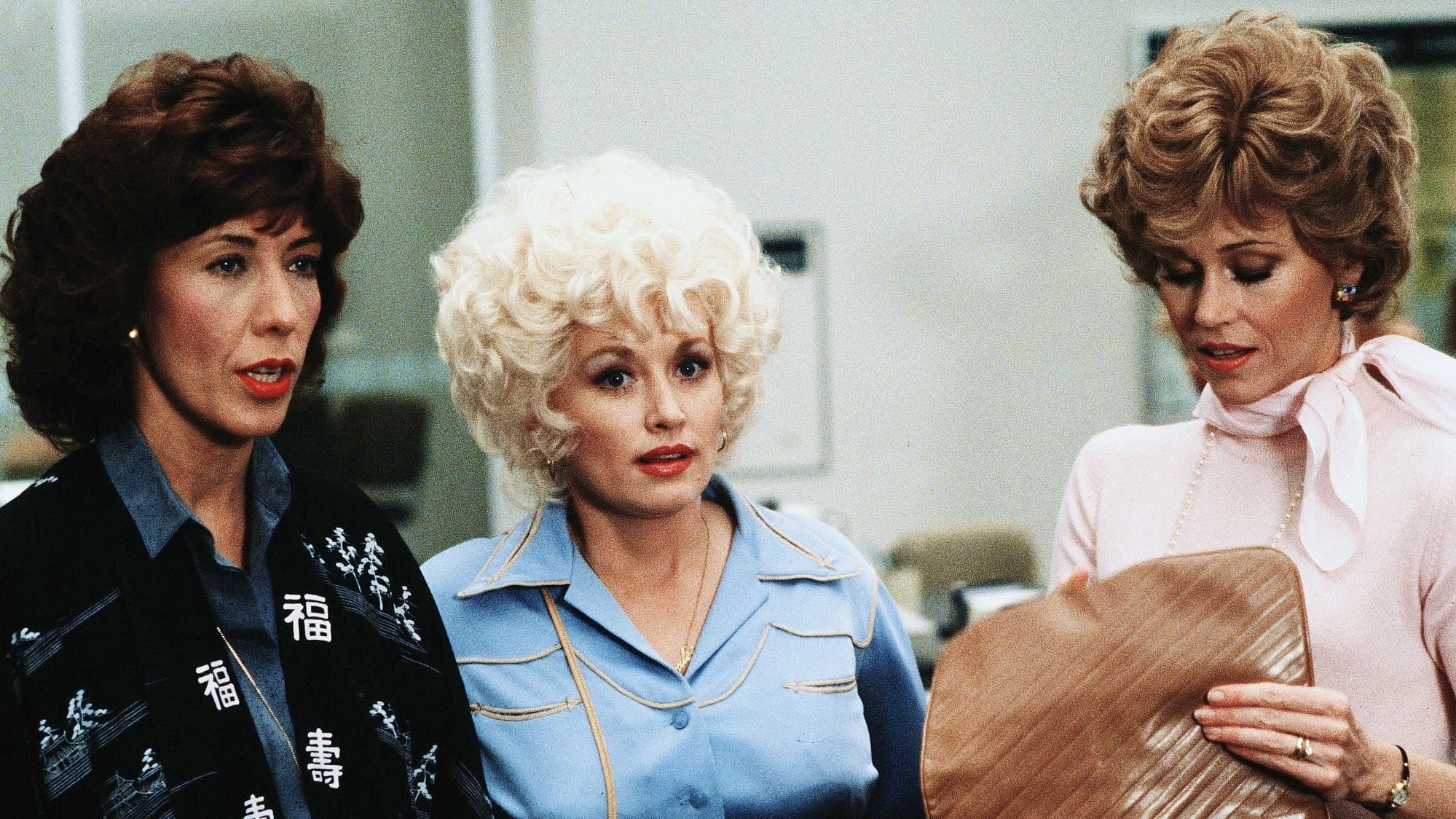 9 to 5Colin Higgins USA, 1980
»Workin’ 9 to 5, what a way to make a livin’ | Barely getting’ by, it’s all takin’ and no givin’ | They just use your mind | And you never get the credit | It’s enough to drive you crazy if you let it«. Dolly Parton’s anthem for all exploited office workers from the 80s cult comedy of the same name gets straight to the point: They only use you, don’t appreciate you, and drive you crazy if you don’t fight back. Jane Fonda, Lily Tomlin, and Dolly Parton join forces in a plot against their misogynistic boss – determined to improve working conditions for the women who keep things running in their male-dominated company. They dream of revenge – until fantasy and reality collide and chaos takes its crazy course. With a razor-sharp script by Patricia Resnick and a brilliant ensemble cast, the film quickly became a cult film in the US and has inspired a sitcom, a musical and countless drag performances in the 45 years since its premiere.
More Info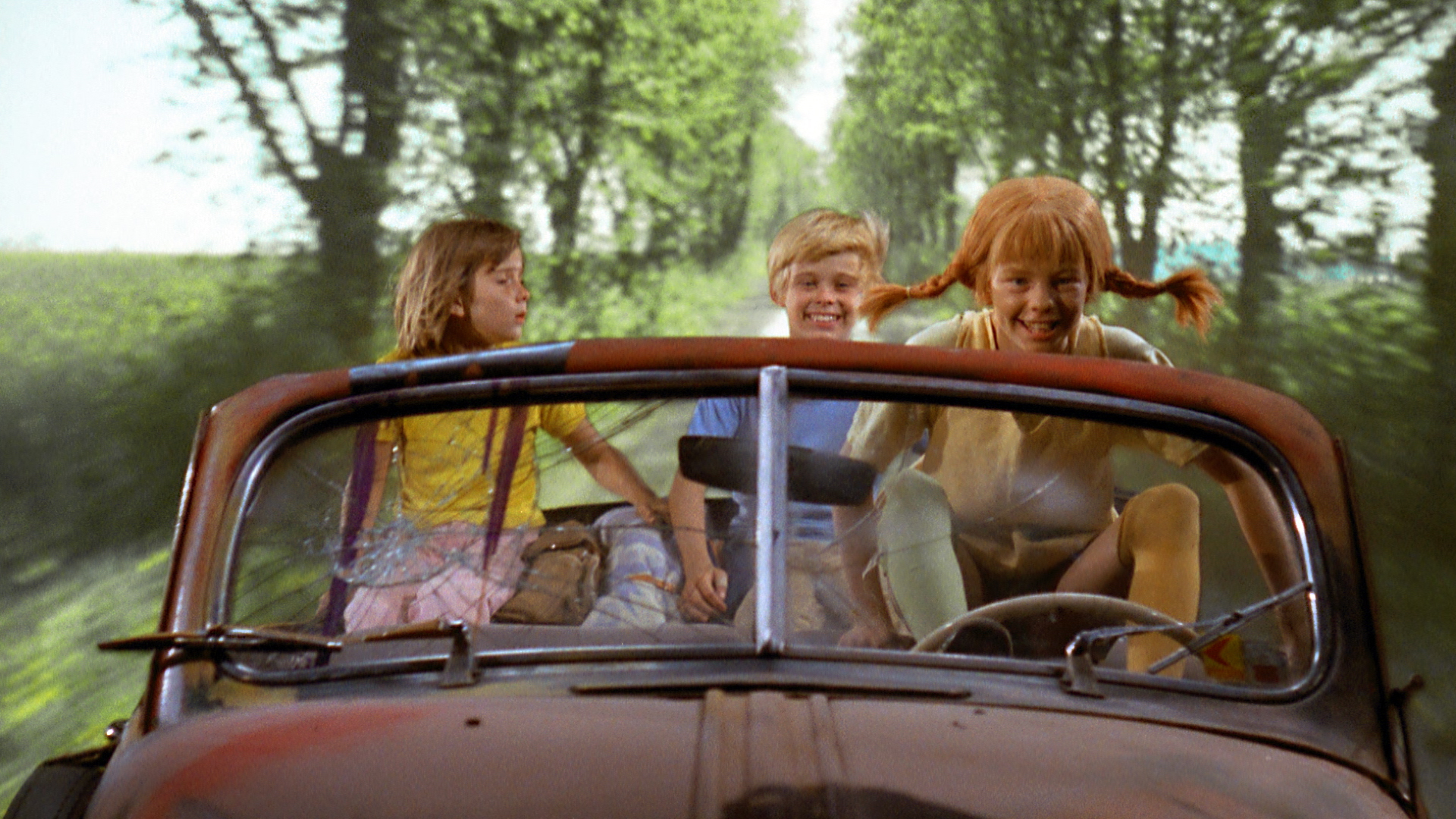 Pippi on the RunOlle Hellbom Sweden, West Germany, 1970
Who doesn't know her: Pippi Longstocking, the strongest girl in the world, with the red pigtails, broad grin and her companions Mr. Nilsson and Little Uncle. Together with their friends Annika and Tommy, they experience a wild and crazy summer. When Pippi moves into the village, everything immediately seems to be turned upside down. Of course, there is a lot of trouble with adults who don't really want to see the little tomboy in their orderly world. But whatever rules and order the adults have come up with are simply thrown overboard by Pippi! From a police alarm to a cheerful bank robbery - nothing goes according to plan, and that's exactly what makes this movie such great fun for young and old. Pippi on the Run is pure joie de vivre, a firework of humor and unconventional ideas that will leave you laughing and immersed in Pippi's crazy world.
More Info Nouvelle VagueJean-Luc Godard Switzerland, France, 1990
In his excessive eclecticism, the total filmmaker Godard is everything - thus also a Lacanian, an analyst of love with a sense of mirroring and entanglements, which in his system refer back to something else, something greater. Despite its allusive title, NOUVELLE VAGUE is not a recapitulation of recent film history (with the passive-aggressive Alain Delon in the leading role), but a tale of the expulsion from paradise and the return of the savior, of man and woman, of Tristan and Isolde, of reincarnations of words and images hidden beneath the layers of the web of thought. Acta est fabula.
More Info